
The Supreme Court Saying That Getting a Property Registered in Your Name Does Not Make You the Owner


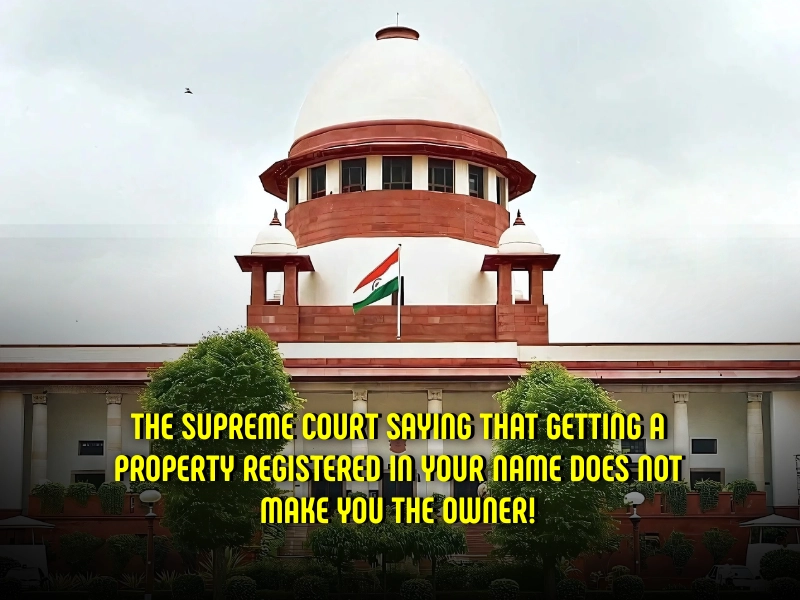
Recently, and in a major move, the Supreme Court of India has decided that, just because a property is registered in your name, you are not considered a legal owner. The decision has raised eyebrows among many property purchasers and beneficiaries nationwide. Whether you have bought property or inherited it to the family, the same decision brings to the fore the need of documentation and correct title acquisition. The message is clear and loud: property registration is not the last step toward owning property.
What the Supreme Court Said: Registration is Not Enough
The court explained that having a property registered in your name is not sufficient and only a relevant condition that makes you a genuine owner of the property. Title that is ownership in legal terms must be established using a succession of subsidiary documentation, especially where the property is inherited or has a complicated legal history of ownership. This then begs the question, what does this portend to property owners? In simple terms, without detailed documentation, your ownership may be disputed, despite being listed on the registration documents, under your name.
Also Read: Godrej Properties Sells 90 Flats for Rs 1,000 Crore in Gurugram
Essential Documents to Establish Legal Ownership
When you are purchasing a new property or inheriting one, this is a complete checklist of documents and procedures, which you need to complete to make your claim on the property legally valid:
1. Registered Will: The Cornerstone of Inheritance
When you are inheriting property, ensure that there is a registered Will. Court noted that registered documents are legally superior to unregistered ones. A handwritten and unregistered Will cannot stand up very well to legal challenges, particularly in the face of challenges by other heirs.
2. No Objection Certificates (NOCs) from Family Members
This is particularly crucial for inherited property:
- If you are inheriting, take written NOCs from your siblings or other legal heirs.
- If buying a property that was inherited by the seller, ask for NOCs from their family members to avoid future disputes.
Such records will help to avoid lawsuits of dissatisfied relatives in the future.
3. Sale Deed: The Ultimate Proof of Sale
A General Power of Attorney (GPA) or Agreement to Sell, does not pass off as a valid document to prove ownership unless it is used in conjunction with a valid Sale Deed. Legal title of the seller to the buyer is transferred and recognized by the law only through a registered Sale Deed.
4. Proof of Payment: Certified Bank Statements
It is your responsibility to show that you have really paid the property. Retain certified copies of bank statements or receipts of payment to transfer of money to the seller. This demonstrates the transaction was legit and made.
5. Physical Possession: A Crucial Requirement
It is not all about the papers. To enhance your ownership rights to the property you must possess it physically. Physical possession is a factor even courts consider in the event of a dispute.
6. No Dues Certificates from Key Authorities
Obtain NOCs from the following:
- The society or developer where the property is located.
- Municipal authorities, house tax and utility departments.
- Any banks that may have given loans on the property previously.
This will help to eliminate any unknown encumbrances or liabilities.
7. Mother Deed or Title Chain
You should keep a clear chain of ownership records and that begins with the original allotment or sale. This is frequently referred to as the Mother Deed. It must indicate all the transfers of ownership throughout the years. Any inconsistency in this chain will question your title.
Additional Must-Have Documents
Along with the above, the following documents are also crucial:
- ID proof of the seller to verify their identity.
- Building Plan Approval from the municipal authority.
- Khata Certificate and Khata Extract (especially in Karnataka and some other states) which reflect property details in local records and are necessary for property tax and utility connections.
Also Read: Forget Delhi & Bengaluru This Indian City Delivered 80% Property Returns Since 2020!
Conclusion: Don’t Just Rely on a Registry – Secure Your Title
This decision by the Supreme Court is an eye-opener to property owners and investors. In a place where real estate disputes are the order of the day and property fraud is not a rare incidence; a registered Sale Deed is not sufficient. The legal documents comprising of a bundle of documents have to be established in ownership. Make sure to collect and validate all these important documents whether you intend to buy or you are inheriting a property. Yes, it is tedious, but this is the only way between the legal and actual protection of your rights. Real-estate is a world where documentation is power. Be prepared.